





Heating & Cooling
System
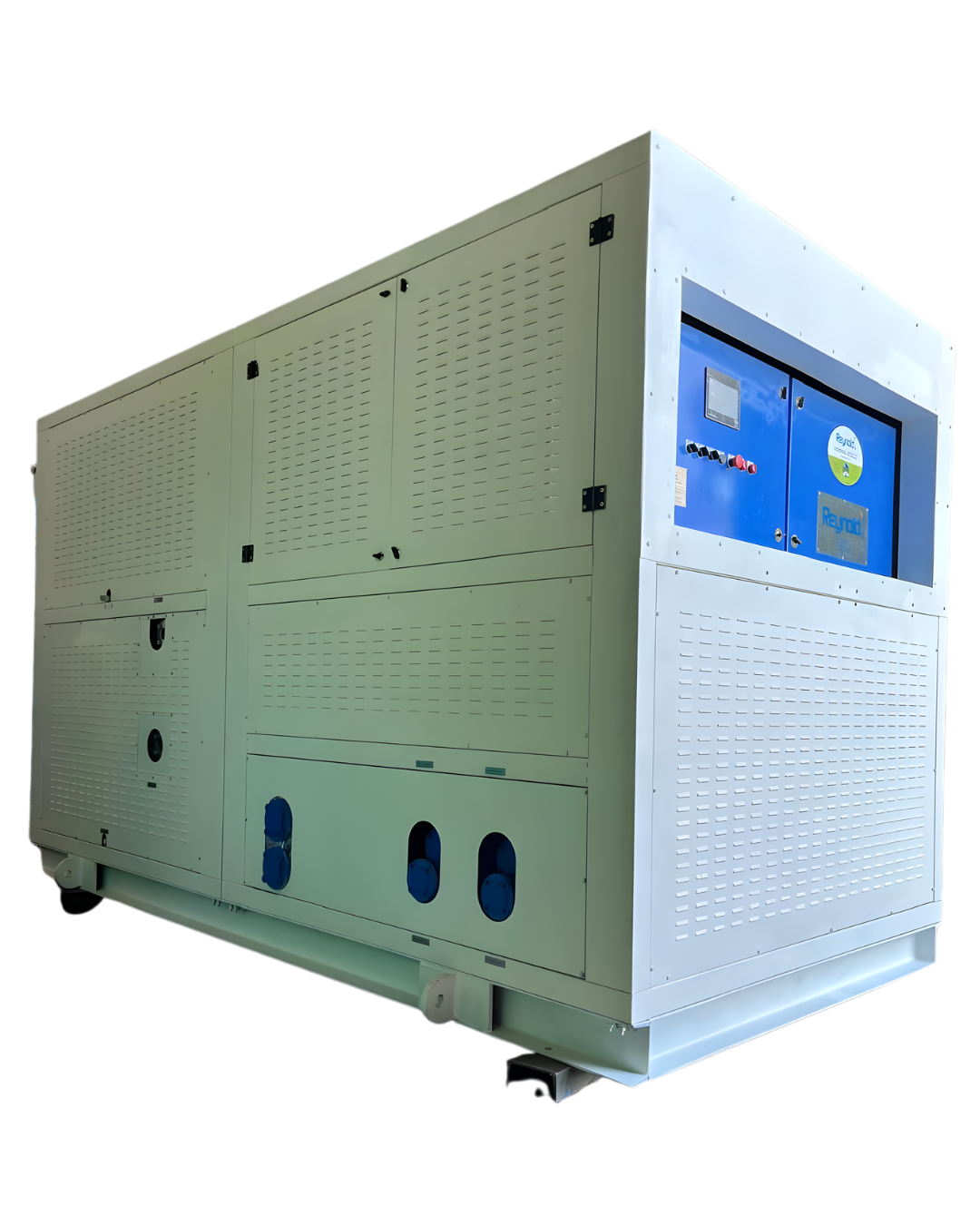
+5 Deg C to +90 Deg C
- Compact
- Efficient
- Inbuilt Primary & Secondary Pump
- Fully Microprocessor Controlled with MODBUS
- Thyristor based Heating for Precise Temperature Control
- Quick Chanage over from Heating to Cooling
- Water Delivery Pressure upto 6 bar



Options...
Heating and Cooling System
Many industrial manufacturing processes require accurate temperature control throughout production. Some processes need heating during one stage and cooling during another. Using separate heating and cooling equipment can increase system complexity, equipment footprint and operating requirements. A Heating and Cooling System combines both functions into a single temperature-control solution, allowing process fluid temperature to be raised or lowered according to the production requirement.
Reynold India offers industrial Heating and Cooling Systems designed for applications where precise and flexible temperature control is required. The system is designed to operate over a temperature range of +5°C to +90°C and incorporates features such as an inbuilt primary and secondary pump, microprocessor-based control with MODBUS communication, thyristor-based heating and quick changeover between heating and cooling modes. The published system also lists water delivery pressure up to 6 bar.
What Is a Heating and Cooling System?
A heating and cooling system is a process temperature-control unit capable of both adding and removing heat from a circulating fluid.
Depending on the application, the circulating medium may be water or another compatible process fluid. During the heating cycle, the system increases the fluid temperature using a controlled heating element. During cooling, refrigeration is used to remove heat from the fluid and bring it back to the required temperature.
The heated or cooled fluid is then circulated through the process equipment. This creates a controlled closed-loop temperature-management system.
Such systems are particularly useful for manufacturing processes where temperature requirements change frequently or where the same equipment needs both heating and cooling during different stages of production.
How Does a Heating and Cooling System Work?
The basic operation involves two separate thermal functions working through a common process-fluid circuit.
- Heating Mode: During heating, electrical heating elements generate heat and transfer it to the circulating process fluid. Reynold India's system uses thyristor-based heating, which allows the heating output to be controlled accurately according to the required temperature.
The pump circulates the fluid through the process equipment while the control system monitors temperature and adjusts the heating output. - Cooling Mode: When cooling is required, the refrigeration circuit removes heat from the process fluid. The refrigerant absorbs heat through the evaporator and rejects it through the condenser.
Once the required temperature is reached, the cooled fluid is circulated back to the process. - Changeover Between Heating and Cooling: One of the useful features of a combined heating and cooling system is the ability to change from heating to cooling without requiring two independent temperature-control packages. Reynold India's product page specifically lists quick changeover from heating to cooling.
The exact changeover sequence depends on the process and control configuration.
Key Features of Reynold India Heating and Cooling System
- Operating Temperature Range: +5°C to +90°C: The published system is designed for process temperatures from +5°C to +90°C. This range allows the unit to handle applications requiring both moderate cooling and controlled heating.
The actual operating temperature should be selected according to the process requirement, fluid properties and equipment configuration. - Compact Design: Combining heating and cooling functions in one package can reduce the number of separate systems required in a process area. This can help simplify equipment layout and installation.
- Inbuilt Primary and Secondary Pump: The system is available with inbuilt primary and secondary pumps. This integrated pumping arrangement can simplify the process-fluid circulation system and reduce the requirement for separate external pumping equipment.
Pump selection should be based on the required flow rate, pressure and process piping resistance. - Microprocessor Control with MODBUS: The Heating and Cooling System is fully microprocessor controlled with MODBUS communication.
Microprocessor control allows important operating parameters to be monitored and the heating/cooling functions to be managed automatically. MODBUS communication can also allow the unit to interface with compatible plant automation or monitoring systems. - Thyristor-Based Heating: Thyristor-based heating provides controlled electrical power to the heating elements. This allows the system to regulate heating output more precisely than a simple on/off heating arrangement.
Precise heating control is useful in processes where temperature fluctuations can affect product quality or production consistency. - Quick Heating-to-Cooling Changeover: Manufacturing processes may require heating during one stage and cooling immediately afterward. The quick changeover feature helps the temperature-control system respond to these changing process requirements.
- Water Delivery Pressure Up to 6 Bar: The published specification lists water delivery pressure up to 6 bar.
The actual pressure requirement should be checked against the process equipment, piping network, flow rate and pump characteristics before final equipment selection.
Applications of Heating and Cooling Systems
Heating and cooling systems can be used in industries where process temperature needs to be maintained within a defined range.
- Plastic Processing: Plastic processing equipment often requires controlled mould and process temperatures. Temperature control can influence cycle time, product quality and dimensional consistency.
A combined heating and cooling system can provide the required temperature during different stages of moulding and processing. - Injection Moulding: Injection moulding processes can require controlled mould temperatures. Depending on the application, the process may need heating during startup and cooling during normal operation.
A combined temperature-control system can provide both functions from one package. - Extrusion Processes: Extrusion lines may require temperature management for dies, rolls, barrels or other process components. Stable thermal conditions can help maintain consistent production parameters.
- Rubber Processing: Rubber processing and moulding applications can require controlled heating and subsequent cooling. A combined system can be selected where both thermal functions are required.
- Chemical Processing: Chemical processes frequently involve temperature-sensitive reactions. Controlled heating and cooling can help maintain the desired process temperature during different stages of production.
The exact fluid, temperature and system configuration should be selected according to the chemical process and material compatibility requirements. - Pharmaceutical Manufacturing: Pharmaceutical processes may require precise temperature control for equipment and process fluids. A properly configured heating and cooling system can provide controlled thermal management where permitted by the process and facility requirements.
- Food and Beverage Processing: Certain food and beverage processes require controlled heating and cooling during production. The system can be integrated with suitable process equipment according to the required temperature range and hygiene requirements.
Advantages of a Combined Heating and Cooling System
A combined system can provide several practical advantages for industrial users:
- Heating and cooling from one integrated package
- Operating range of +5°C to +90°C
- Quick changeover between heating and cooling
- Precise thyristor-based heating
- Inbuilt primary and secondary pumps
- Microprocessor-based automatic control
- MODBUS communication
- Water delivery pressure up to 6 bar
- Compact equipment arrangement
- Reduced need for separate heating and cooling units
- Suitable for variable process temperature requirements
The actual energy consumption and temperature-control performance depend on the process load, fluid properties, operating temperatures, ambient conditions and equipment configuration.
Heating and Cooling System vs. Separate Heating and Cooling Equipment
A conventional process may use one unit for heating and another for cooling. While this arrangement can be suitable for some applications, it can require additional space, piping, pumps and controls.
A combined heating and cooling system integrates both functions into a coordinated package.
This can be particularly useful when:
- The process frequently switches between heating and cooling.
- Space is limited.
- Centralized temperature control is preferred.
- The same process circuit requires both thermal functions.
- Automatic temperature management is required.
However, the final selection should always be based on the process duty. For applications with very high heating or cooling loads, separate systems may sometimes be more appropriate.
How to Select the Right Heating and Cooling System?
Correct sizing requires detailed information about the process.
- Process Temperature: Define the minimum and maximum required temperatures. Reynold India's published system range is +5°C to +90°C.
- Heating Load: The required heating capacity depends on the fluid volume, starting temperature, target temperature, heat losses and required heating time.
- Cooling Load: The cooling capacity depends on the process heat load, fluid flow rate, entering temperature and required outlet temperature.
- Flow Rate: The required circulation flow must be determined from the process heat load and temperature difference.
- Pressure Requirement: The system should be selected according to the required delivery pressure and total pressure drop through the process circuit.
- Fluid Properties: Specific heat, viscosity, freezing point, boiling point and material compatibility should be considered when selecting the process fluid and heat-transfer components.
- Control Requirements: If the plant requires automatic temperature regulation and communication with a central control system, microprocessor control and MODBUS connectivity can be considered.
Why Choose Reynold India?
Reynold India specializes in industrial chillers and customized cooling solutions. The company operates three manufacturing facilities in India and states that its manufacturing facilities follow engineering, fabrication and testing practices aligned with standards including HTRI, ASME Section VIII/IX, TEMA and ATEX for applicable equipment and installations.
Reynold India also focuses on customized equipment and solutions according to specific process requirements. Its published company information describes engineering capabilities covering design, development, manufacturing, quality, testing, projects, erection and commissioning.
For a Heating and Cooling System, this application-specific approach is important because the required heating and cooling capacity, operating temperatures, flow rate and pressure can differ significantly from one process to another.
Frequently Asked Questions
- What is a Heating and Cooling System? A Heating and Cooling System is an industrial temperature-control unit that can both heat and cool a circulating process fluid according to the required operating temperature.
- What is the temperature range of Reynold India's Heating and Cooling System? The current product page lists an operating range of +5°C to +90°C.
- Does the system have an inbuilt pump? Yes. The published specifications list inbuilt primary and secondary pumps.
- How is the heating controlled? The system uses thyristor-based heating for precise temperature control.
- Can the system communicate with a plant automation system? Yes. The system is listed as microprocessor controlled with MODBUS communication.
- What is the maximum water delivery pressure? The published specification lists water delivery pressure of up to 6 bar.
Heating and Cooling System Manufacturer in India
A combined heating and cooling system can be a practical solution for industrial processes where temperature must be increased and reduced repeatedly during production. Instead of using independent heating and cooling equipment, an integrated unit can provide both functions through a coordinated temperature-control system.
Reynold India's Heating and Cooling System is designed for process temperatures from +5°C to +90°C and includes features such as thyristor-based heating, quick heating-to-cooling changeover, inbuilt primary and secondary pumps, microprocessor control with MODBUS and water delivery pressure up to 6 bar.
For accurate selection, the application should be evaluated based on heating load, cooling load, required temperature range, process-fluid properties, flow rate, pressure requirement and operating cycle. Providing these details allows the system to be configured according to the actual process requirement rather than using a generic standard specification.