





API REFRIGERATION PACKAGE
- Cooling Capacity Range upto 2000TR
( in case of Water Cooled) - Cooling Capacity Range upto 1000TR
( in case of Air Cooled) - Temperature upto (-) 165°C
- Refrigerant propane, propylene, HFC, HFO etc.
- Compressor API 619
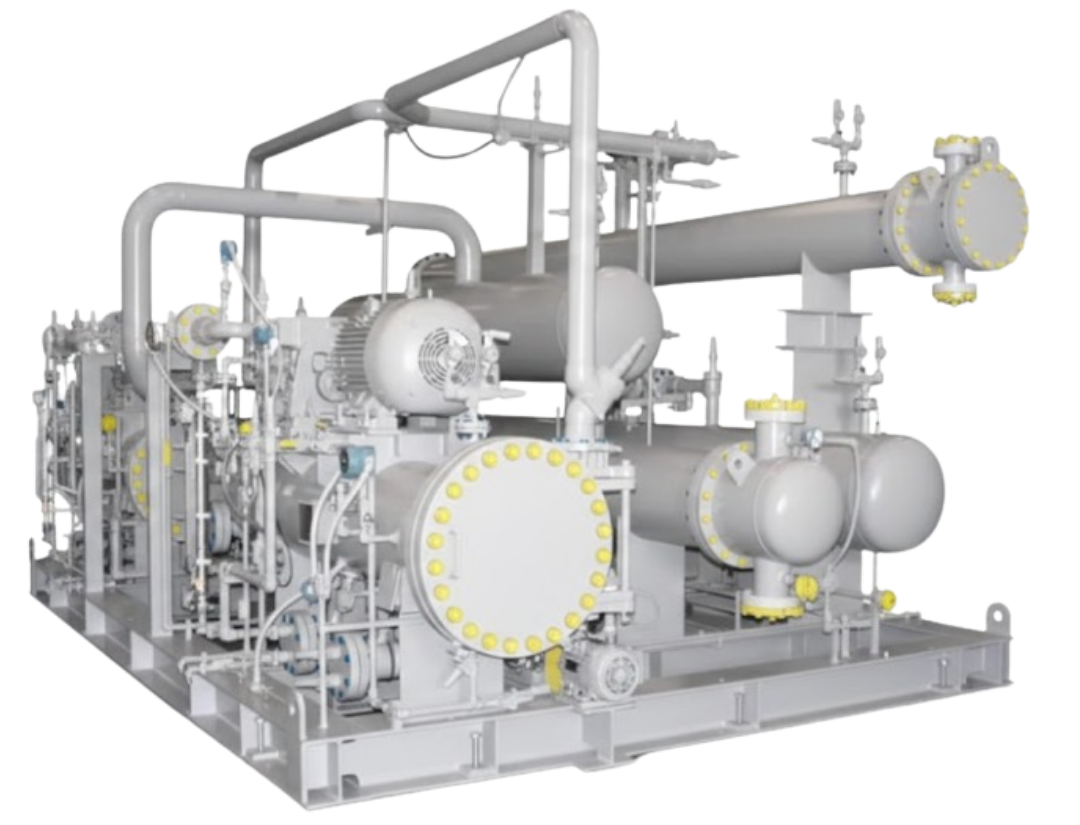





API Refrigeration Package
An API Refrigeration Package is a specialized industrial refrigeration solution designed for demanding process applications where reliable cooling, low-temperature operation and continuous performance are critical. These refrigeration systems are used in process industries where conventional commercial chillers may not be suitable because of high cooling loads, low operating temperatures, specific refrigerant requirements or the need for customized engineering.
Reynold India offers API Refrigeration Packages as part of its Project Division, with systems engineered for large-scale and specialized industrial refrigeration requirements. The company’s published specifications include cooling capacities of up to 2000 TR for water-cooled systems and up to 1000 TR for air-cooled systems, with operating temperatures down to -165°C. The package can be designed for refrigerants including propane, propylene, HFC and HFO, with API 619 compressors specified for the package.
What Is an API Refrigeration Package?
An API Refrigeration Package is an engineered refrigeration system developed for industrial processes that require controlled and dependable cooling. Unlike standard packaged chillers, API refrigeration packages are generally designed around the actual process conditions, cooling duty, temperature range, refrigerant, equipment configuration and site requirements.
The term API in this context relates to the engineering requirements associated with process and petroleum-related applications, where equipment reliability, safety, material selection, documentation and performance can be important considerations.
A complete package may integrate refrigeration equipment, heat exchangers, compressors, condensers, controls, instrumentation, piping and safety systems into a coordinated system. The final configuration depends on the process and project specifications.
For applications involving hydrocarbons, petrochemicals, gas processing or other demanding industrial processes, refrigeration equipment may need to operate under challenging temperature and load conditions. An appropriately engineered API refrigeration package provides a centralized solution for such requirements.
API Refrigeration Package Temperature Range
One of the important characteristics of a specialized refrigeration package is its ability to achieve low process temperatures.
Reynold India lists a temperature capability of up to -165°C for its API Refrigeration Package.
Such low-temperature requirements can occur in processes involving gas cooling, condensation, liquefaction, hydrocarbon processing and other specialized industrial operations. At these temperatures, refrigeration system design becomes considerably more demanding because equipment selection, refrigerant properties, heat exchanger performance, insulation, pressure control and material compatibility must all be considered carefully.
The actual achievable process temperature and refrigeration capacity should always be established from the project's design conditions rather than assuming that every configuration will operate at the maximum published range.
Cooling Capacity of API Refrigeration Package
Refrigeration capacity is another important consideration when selecting a large industrial refrigeration system.
According to Reynold India's published specifications:
- Water-cooled API Refrigeration Package: Cooling capacity up to 2000 TR
- Air-cooled API Refrigeration Package: Cooling capacity up to 1000 TR
- Temperature capability: Down to -165°C
- Compressor: API 619
- Refrigerants: Propane, propylene, HFC, HFO and others depending on application
These ranges indicate that the package can be considered for large industrial refrigeration duties. However, actual capacity selection depends on process load, evaporating and condensing conditions, refrigerant, ambient conditions, cooling medium and required operating temperature.
Refrigerants Used in API Refrigeration Systems
The refrigerant is one of the most important design parameters in an industrial refrigeration package. Different processes require different refrigerants depending on temperature, pressure, thermodynamic characteristics, safety requirements and applicable project standards.
Reynold India lists propane, propylene, HFC and HFO refrigerants for its API Refrigeration Package.
- Propane Refrigeration: Propane can be used in industrial refrigeration and hydrocarbon process applications where its thermodynamic characteristics are suitable for the required process conditions. Because propane is flammable, the refrigeration system requires appropriate engineering, controls and safety provisions.
- Propylene Refrigeration: Propylene is another hydrocarbon refrigerant that can be considered for specific industrial process cooling applications. Its suitability depends on the process temperature, pressure, refrigeration duty and overall system design.
- HFC and HFO Refrigerants: HFC and HFO refrigerants may be selected for particular applications based on project requirements and applicable environmental and safety considerations. The correct refrigerant should be selected after evaluating the complete refrigeration cycle and process requirements.
API 619 Compressor for Refrigeration Package
Reynold India's API Refrigeration Package specifications identify an API 619 compressor.
For large process refrigeration systems, compressor selection is critical because the compressor directly influences system capacity, efficiency, operating range and reliability.
API 619 is associated with rotary-type positive-displacement compressors used in petroleum, petrochemical and gas-industry services. For a refrigeration package, the compressor arrangement and associated equipment should be engineered according to the actual project requirements and applicable standards.
The compressor package may require suitable lubrication, oil management, instrumentation, protection systems, capacity control and monitoring depending on the selected configuration.
Air-Cooled and Water-Cooled API Refrigeration Packages
API refrigeration systems can be configured with different heat rejection arrangements.
- Water-Cooled API Refrigeration Package: A water-cooled configuration uses a cooling-water system to reject heat from the refrigeration cycle. Reynold India lists capacities up to 2000 TR for its water-cooled API refrigeration package.
Water-cooled systems can be suitable for large refrigeration loads where an appropriate cooling-water system is available. - Air-Cooled API Refrigeration Package: An air-cooled configuration rejects heat directly to ambient air. Reynold India lists cooling capacities up to 1000 TR for its air-cooled API refrigeration package.
Air-cooled systems can be useful where cooling-water availability is limited or where the project requires an air-cooled heat-rejection arrangement.
The final choice between air-cooled and water-cooled construction depends on capacity, ambient conditions, utility availability, site constraints, energy considerations and project requirements.
Applications of API Refrigeration Package
API refrigeration packages can be used in several process industries where controlled industrial cooling or low-temperature refrigeration is required.
Typical applications may include:
- Oil and gas processing
- Petroleum and petrochemical plants
- Refinery process cooling
- Hydrocarbon processing
- Gas processing plants
- Chemical process industries
- Gas condensation and cooling
- Hydrocarbon condensation
- Process gas cooling
- Low-temperature process applications
- Industrial refrigeration systems
- Specialized process cooling projects
The exact application and refrigeration configuration should be determined through a detailed process and engineering assessment.
Important Features of an API Refrigeration Package
A specialized API refrigeration system may incorporate several features depending on project requirements:
- Large Cooling Capacity: The published Reynold India range extends to 2000 TR for water-cooled systems and 1000 TR for air-cooled systems, making the package suitable for large industrial refrigeration requirements.
- Low-Temperature Operation: The package is specified for temperatures down to -165°C, supporting demanding low-temperature process applications.
- Multiple Refrigerant Options: Propane, propylene, HFC and HFO refrigerants are listed, allowing the refrigeration system to be considered for different process requirements.
- Industrial Compressor Technology: The package specifies an API 619 compressor, suitable for applications requiring specialized industrial compressor engineering.
- Project-Based Engineering: Because industrial refrigeration requirements vary significantly from one plant to another, the package can be engineered around the process duty, temperature, refrigerant, cooling method and site conditions.
Safety and Standards Considerations
Safety is particularly important when refrigeration systems are designed for hydrocarbon or other potentially hazardous process environments.
Reynold India's API Refrigeration Package page displays references to ATEX, IECEx, NEMA, UL-US and ASME, along with propane and propylene references.
However, certification and compliance requirements should always be confirmed against the specific project specification. Not every package configuration will necessarily carry every certification. The required standards, hazardous-area classification, electrical equipment requirements, pressure-vessel requirements and documentation should be established during project engineering.
Customized API Refrigeration Package
Industrial refrigeration projects rarely have identical operating conditions. Therefore, selecting an API refrigeration package requires more than simply choosing a nominal TR capacity.
Important engineering parameters may include:
- Required cooling capacity
- Process inlet and outlet temperatures
- Evaporating temperature
- Condensing temperature
- Refrigerant selection
- Process fluid characteristics
- Cooling-water conditions
- Ambient temperature
- Pressure requirements
- Hazardous-area classification
- Electrical supply
- Installation location
- Control philosophy
- Applicable codes and standards
A properly engineered system should be selected after evaluating these parameters together.
Why Choose Reynold India for API Refrigeration Package?
Reynold India operates in industrial cooling and refrigeration and lists the API Refrigeration Package under its Project Division alongside specialized solutions such as Ammonia Purification Package Systems, Drycooler with Hydraulic Packages, Hazardous Area Chillers for Oil & Gas and Hydrogen Chiller Packages.
The company also offers a broad range of industrial and customized refrigeration solutions, including screw chillers, customized chillers, ammonia chillers and industrial refrigeration systems.
For a process refrigeration project, the right solution depends on the actual operating conditions rather than a standard catalogue selection. Reynold India's project-oriented approach allows the refrigeration package to be evaluated according to the required cooling duty, temperature range, refrigerant, heat-rejection method and site requirements.
Frequently Asked Questions
- What is an API Refrigeration Package? An API Refrigeration Package is a specialized industrial refrigeration system designed for demanding process applications, particularly where large cooling capacities, low temperatures and project-specific engineering are required.
- What is the maximum cooling capacity of the Reynold India API Refrigeration Package? Reynold India lists cooling capacities up to 2000 TR for water-cooled systems and up to 1000 TR for air-cooled systems.
- What is the lowest temperature specified for the package? The published specification lists temperatures down to -165°C. The actual operating temperature depends on the final system design and process conditions.
- Which refrigerants can be used? Reynold India lists propane, propylene, HFC and HFO refrigerants for the API Refrigeration Package. The appropriate refrigerant depends on the process and project requirements.
- What compressor is used in the API Refrigeration Package? The published product specification identifies an API 619 compressor.
- Can an API Refrigeration Package be customized? Yes. Industrial process refrigeration systems need to be selected according to factors such as cooling load, temperature, refrigerant, heat-rejection method, process conditions, site environment and applicable project standards.
Get an API Refrigeration Package for Your Process
If your plant requires high-capacity industrial refrigeration, low-temperature cooling or specialized process refrigeration, an API Refrigeration Package can provide a suitable engineered approach when designed around the actual process requirements.
Reynold India offers API Refrigeration Packages for demanding industrial applications, with published capabilities of up to 2000 TR water-cooled, 1000 TR air-cooled and temperatures down to -165°C.
For a new installation, plant expansion or replacement of an existing refrigeration system, the engineering team can evaluate the required cooling capacity, operating temperature, refrigerant, compressor configuration and cooling method to develop an appropriate refrigeration package for the project.